
Sunspot Activity Ceases: What It Means for Earth and Science
The recent disappearance of sunspots raises questions about solar activity and its implications for Earth. Discover the science behind it. Discover why it matte
- BackZee
- 5 min read
TL;DR 🚀
- All sunspots have vanished from the Sun’s surface.
- This phenomenon could impact solar radiation and climate.
- Scientists are closely monitoring solar activity for further insights.
- Historical patterns suggest potential cooling effects on Earth.
- Ongoing research aims to understand the implications for technology and climate.
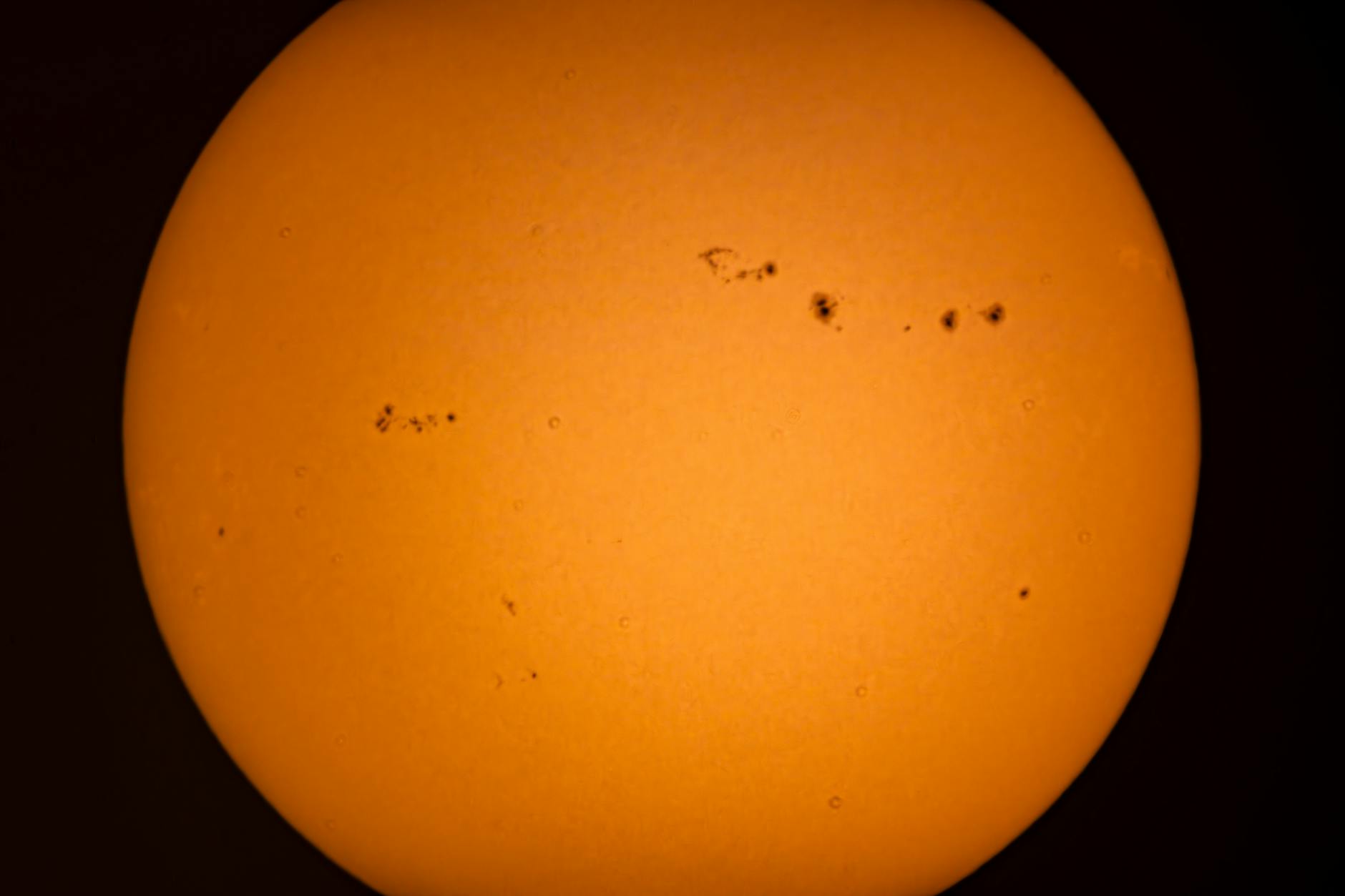
In a surprising turn of events, all sunspots have disappeared from the Sun, leaving scientists and enthusiasts alike pondering the implications of this rare phenomenon. Sunspots are temporary phenomena on the solar surface that indicate magnetic activity, and their absence raises crucial questions about solar behavior and its potential effects on Earth. This event is particularly intriguing given that sunspots have been a consistent feature of solar observation for centuries.
What Are Sunspots? ☀️
Sunspots are dark patches on the Sun’s surface caused by magnetic activity. They can vary in size and number, often appearing in cycles that last about 11 years. Typically, sunspots are associated with solar flares and coronal mass ejections, which can influence space weather and even impact technology on Earth.
The recent disappearance of sunspots is unusual and has prompted scientists to investigate the underlying causes. Understanding sunspot cycles is essential for predicting solar activity and its effects on our planet. The absence of these spots could indicate a shift in solar cycles, potentially leading to changes in solar radiation and climate conditions on Earth.
Historically, sunspot cycles have been linked to various terrestrial phenomena. For instance, during the Maunder Minimum (1645-1715), a period marked by a significant decrease in sunspot activity, Europe experienced notably colder winters, leading to what is often referred to as the “Little Ice Age.” This historical context adds urgency to the current observations, as scientists seek to understand whether we might be on the brink of a similar climatic shift.
Implications for Earth 🌍
The lack of sunspots could have significant implications for our planet. Historically, periods of low solar activity, such as the Maunder Minimum in the 17th century, have been linked to cooler climate conditions on Earth. While it’s too early to predict the long-term effects of this current sunspot absence, scientists are on high alert.
Solar radiation plays a crucial role in regulating Earth’s climate. Changes in solar output can influence weather patterns, ocean currents, and even agricultural productivity. For example, a decrease in solar radiation could lead to lower global temperatures, affecting crop yields and food security. As researchers continue to monitor the situation, they are particularly interested in how this phenomenon may affect global temperatures and climate change.
The potential impacts extend beyond temperature changes. A decrease in solar activity could also influence the jet stream, leading to altered weather patterns that could result in more extreme weather events. This is particularly concerning for regions that are already vulnerable to climate variability.
Quick Takeaways 📌
- Sunspots are indicators of solar magnetic activity.
- Their disappearance could signal changes in solar cycles.
- Historical patterns suggest potential cooling effects on Earth.
- Changes in solar radiation may impact agriculture and weather patterns.
- Scientists are investigating potential climate impacts.
The Science Behind Solar Activity 🔬
Solar activity is driven by complex magnetic interactions within the Sun. These interactions lead to the formation of sunspots, which can affect solar flares and coronal mass ejections. The current absence of sunspots may suggest a decrease in solar magnetic activity, which could alter the dynamics of solar radiation reaching Earth.
Researchers are utilizing advanced telescopes and satellite technology to monitor solar conditions closely. Instruments like the Solar Dynamics Observatory (SDO) and the Solar and Heliospheric Observatory (SOHO) provide real-time data on solar phenomena. The data collected will help scientists understand whether this sunspot disappearance is a temporary anomaly or part of a larger trend in solar activity. For more insights on solar phenomena, check out our detailed analysis on solar cycles and their effects.
Moreover, the implications of solar activity extend to the realm of astrophysics and space exploration. Solar flares and coronal mass ejections can pose risks to astronauts and spacecraft, making understanding solar behavior critical for future missions beyond Earth.
What’s Next for Solar Research? 🔭
The scientific community is gearing up for extensive research to understand the implications of this sunspot disappearance. Ongoing observations will focus on the Sun’s magnetic field and its potential impact on solar weather patterns.
Future studies will likely explore the correlation between sunspot activity and climate variations on Earth. As we continue to face challenges related to climate change, understanding solar influences becomes increasingly vital. The National Aeronautics and Space Administration (NASA) and the European Space Agency (ESA) are already planning collaborative efforts to enhance solar monitoring capabilities.
Quick Takeaways 📌
- Ongoing research will focus on solar magnetic fields.
- Scientists aim to understand the link between sunspots and climate.
- Observations will help predict future solar activity.
- Enhanced monitoring will support space exploration safety.
- Collaborative efforts between agencies may yield new insights.
FAQ ❔
What causes sunspots to form?
Sunspots form due to magnetic activity on the Sun’s surface, which inhibits convection and results in cooler areas that appear darker. These spots can be observed with specialized solar telescopes.
How often do sunspots disappear?
Sunspots typically follow an 11-year cycle, but their complete disappearance is rare and can indicate significant changes in solar activity. The current absence of sunspots is particularly noteworthy given the historical context of solar cycles.
Can sunspot activity affect technology on Earth?
Yes, increased solar activity, including sunspots, can lead to solar flares that disrupt satellite communications, GPS, and power grids on Earth. Understanding these dynamics is crucial for mitigating risks to technology and infrastructure.
What historical events are linked to low sunspot activity?
Periods of low sunspot activity, such as the Maunder Minimum, have been associated with colder climate conditions and significant agricultural impacts in Europe. Understanding these historical patterns helps scientists predict potential future scenarios.
As we continue to monitor the Sun’s behavior, the scientific community remains vigilant, eager to uncover what this unusual phenomenon means for our planet and beyond. The implications of sunspot activity extend far beyond mere curiosity; they touch upon critical aspects of climate science, technology, and our understanding of the universe.