
All Sunspots Disappear: What It Means for Our Solar System
The recent disappearance of sunspots raises questions about solar activity and its effects on Earth. Learn more about this phenomenon. Discover why it matters a
- BackZee
- 4 min read
TL;DR 🚀
Make sure to check our deep dive on why this matters.
- All sunspots have vanished, signaling a potential shift in solar activity.
- This phenomenon could affect Earth’s climate and technology.
- Historical precedents suggest a link between low sunspot activity and cooler global temperatures.
- Scientists are closely monitoring the sun for further developments.
- Understanding sunspots is crucial for predicting future climate patterns and technological impacts.
In a surprising turn of events, all sunspots have disappeared from the sun’s surface, leaving scientists intrigued and concerned. This unusual occurrence could have significant implications for solar activity and its effects on our planet. Understanding the dynamics of sunspots is crucial, as they play a vital role in solar radiation and climate patterns on Earth.
What Are Sunspots? ☀️
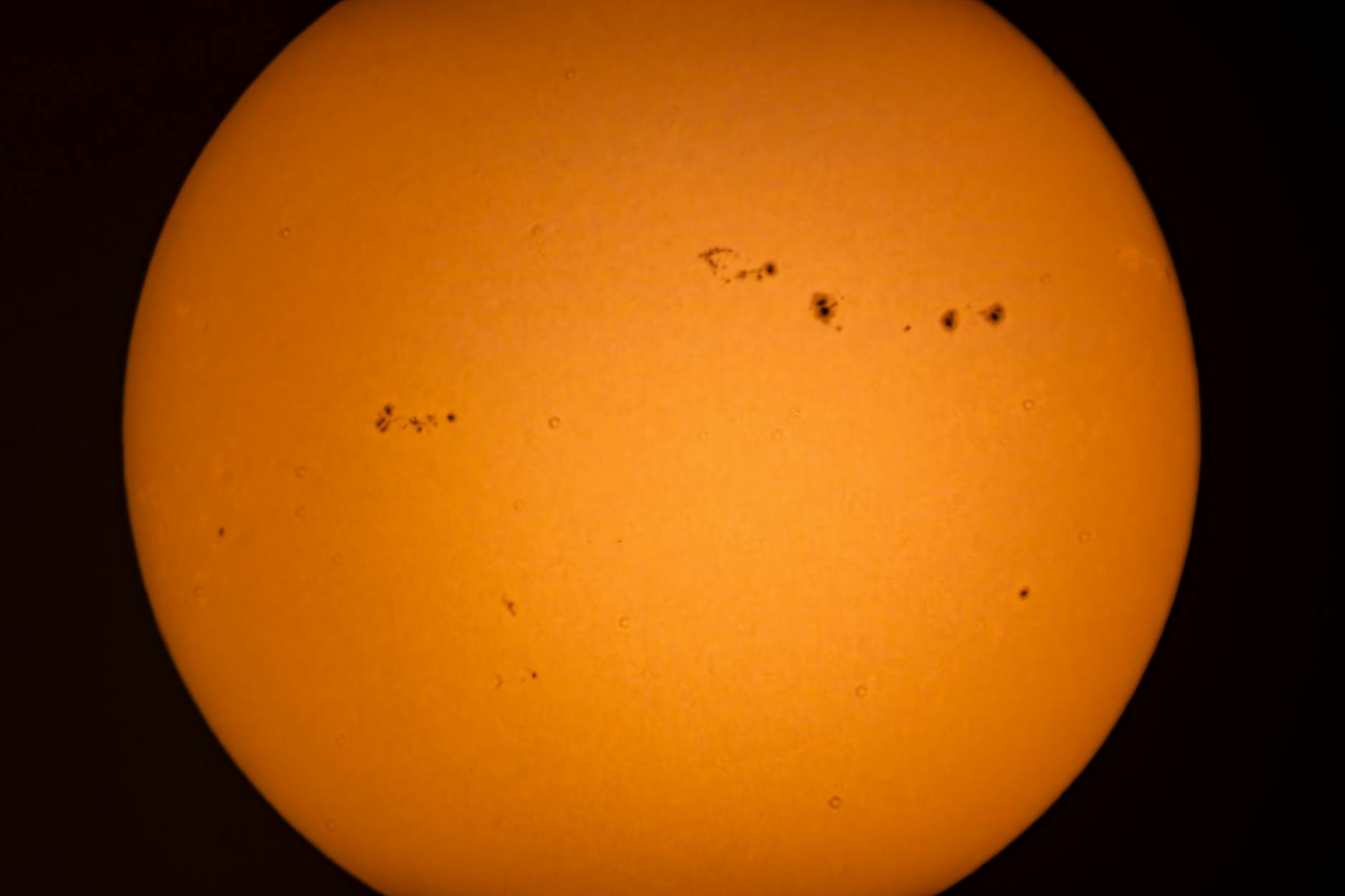
Sunspots are temporary phenomena on the sun’s photosphere that appear as spots darker than the surrounding areas. They are caused by magnetic field fluctuations that inhibit convection, leading to cooler regions on the sun’s surface. Typically, sunspots occur in cycles, with periods of high activity followed by quieter phases.
The average number of sunspots varies significantly over an approximately 11-year cycle known as the solar cycle. During the peak of this cycle, known as solar maximum, sunspots can number in the hundreds, while during solar minimum, they can be nearly absent. The recent disappearance of these spots has raised eyebrows in the scientific community.
Historically, sunspot activity has been linked to various solar phenomena, including solar flares and coronal mass ejections. The absence of sunspots could indicate a transition to a quieter solar cycle, which may have far-reaching consequences for Earth’s climate.
For example, during the Maunder Minimum (1645-1715), a period marked by a significant reduction in sunspot activity, Europe experienced notably colder winters, contributing to what is known as the Little Ice Age. This historical context underscores the importance of monitoring sunspot activity and its potential implications for our climate.
Implications for Earth 🌍
The lack of sunspots can influence solar radiation, which in turn affects Earth’s climate systems. Lower solar activity is often associated with cooler temperatures on Earth, as evidenced by the Maunder Minimum. During this time, Europe experienced harsh winters, crop failures, and widespread famine, illustrating how solar activity can directly impact human societies.
Moreover, sunspots are crucial for the functioning of modern technology. They can affect satellite communications and power grids due to increased solar activity. For instance, solar flares associated with sunspots can disrupt GPS signals and lead to power outages. As sunspots disappear, scientists are concerned about potential disruptions in these systems.
The Economic Impact
The economic implications of reduced solar activity are significant. A cooler climate could lead to decreased agricultural yields, affecting food supply chains and prices globally. According to a study by the National Oceanic and Atmospheric Administration (NOAA), a 1°C drop in average temperature could reduce crop yields by as much as 10%. This could exacerbate food insecurity in vulnerable regions.
Quick Takeaways 📌
- Sunspots are linked to solar activity and climate patterns.
- Their disappearance may lead to cooler temperatures on Earth.
- Historical precedents suggest a correlation between low sunspot activity and significant climate changes.
- Scientists are monitoring the sun for further changes, especially regarding technological impacts.
FAQ ❔
What causes sunspots to form?
Sunspots form due to magnetic field interactions that inhibit convection in the sun’s outer layer, resulting in cooler areas that appear darker. These magnetic fields can become tangled and twisted, leading to the formation of sunspots.
How often do sunspots disappear?
Sunspots typically follow an 11-year cycle of activity, but their complete disappearance is rare and can indicate a shift to a quieter solar phase. The current disappearance is unprecedented in recent history, prompting further investigation.
What are the potential effects of reduced solar activity?
Reduced solar activity can lead to cooler temperatures on Earth, impacting climate patterns and potentially disrupting technological systems reliant on solar energy. This could affect everything from agriculture to satellite communications.
How do scientists monitor sunspots?
Scientists use a variety of tools, including ground-based telescopes and space-based observatories like NASA’s Solar Dynamics Observatory (SDO), to monitor sunspots. These instruments allow researchers to track changes in solar activity in real time.
What can we expect in the future regarding sunspots?
While the current disappearance of sunspots is concerning, scientists are actively studying the sun to understand its behavior better. Future predictions about solar activity will depend on ongoing observations and models that take into account historical data and current trends.
As we continue to observe this intriguing solar phenomenon, the scientific community remains vigilant. The implications of sunspot activity extend beyond mere curiosity; they touch on climate science, technology, and our understanding of the universe. Stay tuned for updates as researchers delve deeper into the mysteries of our sun.