
Sunspot Mystery: All Spots Disappear from the Sun
Scientists baffled as all sunspots vanish, sparking curiosity about solar activity and its implications for Earth. Discover why it matters and what happens next
- BackZee
- 5 min read
TL;DR 🚀
Make sure to check our deep dive on why this matters.
- All sunspots have mysteriously vanished from the Sun.
- This phenomenon raises questions about solar activity cycles.
- Scientists are investigating the potential impacts on Earth.
- Historical parallels suggest possible climate implications.
- Ongoing research aims to understand the long-term effects.
Recently, the Sun has caught the attention of scientists and enthusiasts alike as it has entered a bizarre phase—all sunspots have completely disappeared. This unusual occurrence has sparked a wave of curiosity and concern regarding the implications for solar activity and its effects on our planet.
The Sun’s Blank Canvas ☀️
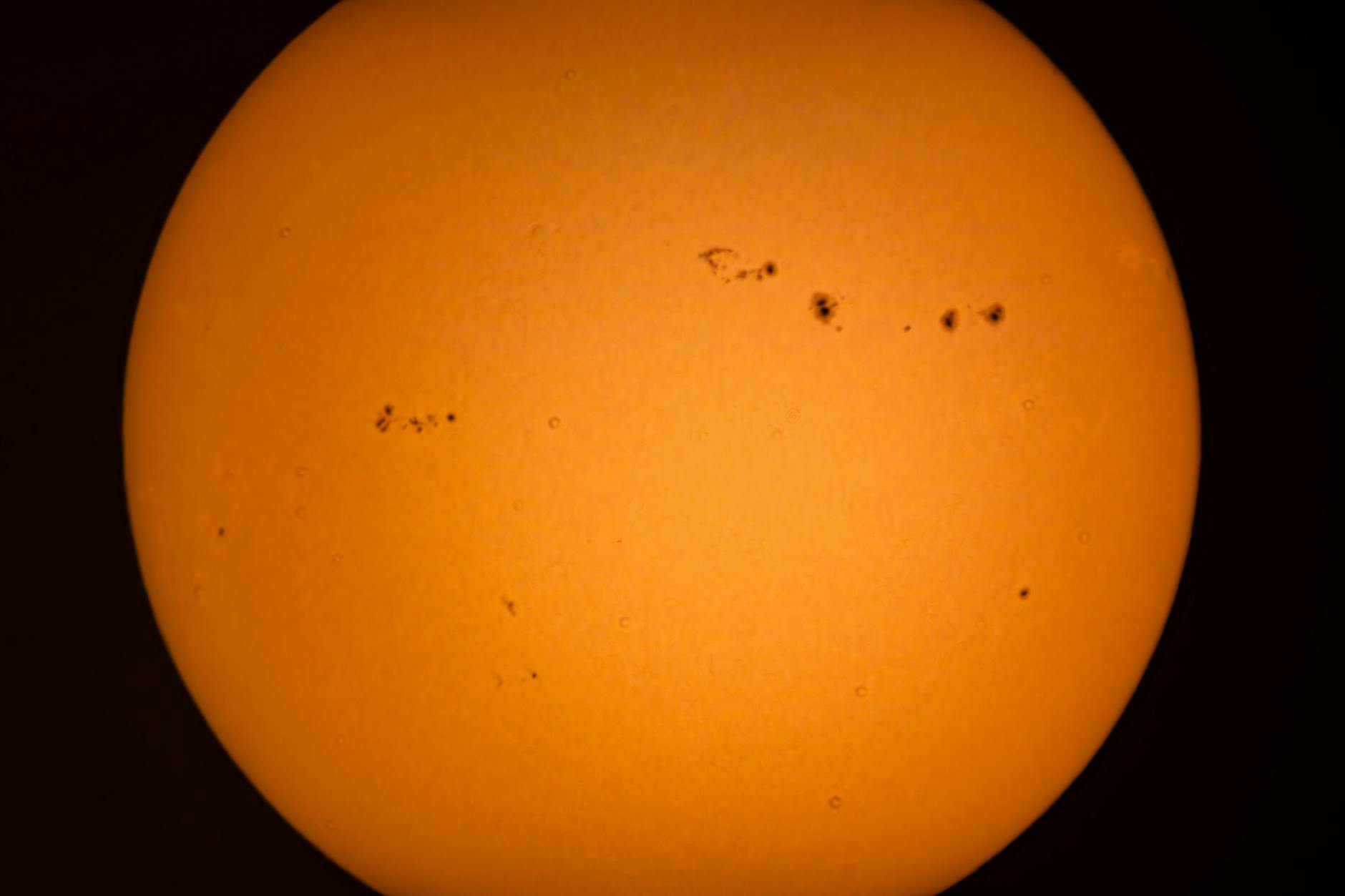
For those who may not know, sunspots are temporary phenomena on the Sun’s surface that appear as dark spots. They are associated with solar activity and magnetic fields. Typically, sunspots are part of an 11-year solar cycle, where their numbers fluctuate. However, the current situation is unprecedented.
Sunspots are formed in regions where magnetic fields are particularly strong, causing the temperature of the Sun’s surface to drop slightly in those areas. This results in the dark spots we observe. The recent disappearance of these spots has left astronomers scratching their heads.
Experts are closely monitoring the Sun’s behavior, as the absence of sunspots could indicate a shift in solar activity. The last time such a phenomenon occurred was during the Maunder Minimum in the 17th century, a time known for its colder temperatures in Europe. During this period, the Thames River in London famously froze over, and agricultural production suffered due to the harsh climate.
Historical Context: The Maunder Minimum
The Maunder Minimum (1645-1715) is a critical historical reference point for understanding the implications of sunspot activity. During this time, sunspots were exceedingly rare, and Europe experienced a significant drop in temperatures, leading to what is now referred to as the Little Ice Age. This period was characterized by harsh winters and poor harvests, which had profound impacts on society, including famine and economic hardship.
The Maunder Minimum serves as a reminder of the potential consequences of reduced solar activity. While modern society is better equipped to handle climate variations, the potential for a similar phenomenon today raises questions about agricultural productivity, energy consumption, and even geopolitical stability.
What This Means for Earth 🌍
The implications of a sunspot-free Sun are significant. Solar activity influences everything from satellite communications to climate patterns on Earth. The absence of sunspots could potentially lead to a decrease in solar radiation, affecting weather systems and possibly leading to cooler temperatures.
Moreover, scientists are exploring how this might impact solar flares and coronal mass ejections (CMEs). These solar events can disrupt technology on Earth, including power grids and GPS systems. For instance, the 1989 geomagnetic storm caused by a CME knocked out power in Quebec, leaving millions without electricity for hours. As researchers delve deeper into this phenomenon, they are also considering historical data to predict future impacts.
The Role of Solar Cycles
Understanding solar cycles is crucial for predicting the Sun’s behavior. The 11-year solar cycle is characterized by periods of solar maximum, when sunspots are abundant, and solar minimum, when they are scarce. The current solar cycle, Solar Cycle 25, began in December 2019 and was expected to peak around 2025. However, the complete disappearance of sunspots raises questions about the reliability of these predictions and the underlying mechanisms driving solar activity.
Quick Takeaways 📌
- Sunspots are crucial for understanding solar cycles and their effects on Earth.
- Their disappearance could lead to cooler temperatures on Earth, reminiscent of historical climate events.
- Ongoing research aims to uncover the long-term effects of this phenomenon on technology and climate.
- Historical parallels, like the Maunder Minimum, provide context for potential impacts on agriculture and society.
FAQ ❔
Why are sunspots important?
Sunspots are indicators of solar activity and can influence Earth’s climate and technology. They help scientists understand the Sun’s magnetic field and its cycles. The presence or absence of sunspots can affect solar radiation levels, which in turn influence weather patterns and climate.
How often do sunspots disappear?
Sunspots typically follow an 11-year cycle, but their complete disappearance is rare and has not been observed in recent history. The current situation is particularly unusual, prompting increased scrutiny from the scientific community.
What historical events relate to sunspot activity?
The Maunder Minimum, a period from 1645 to 1715, saw a significant drop in sunspot activity and is associated with a colder climate in Europe, known as the Little Ice Age. Other historical periods of low solar activity have also been linked to climatic changes, underscoring the importance of monitoring sunspot activity.
What are the potential impacts of a sunspot-free Sun?
A sunspot-free Sun could lead to decreased solar radiation, which may result in cooler temperatures on Earth. This could affect agricultural productivity, energy consumption, and even technology reliant on solar activity, such as satellite communications and power grids.
As the scientific community continues to investigate this intriguing solar phenomenon, the world watches closely. The Sun, our closest star, remains a source of mystery and wonder, reminding us of the intricate connections between celestial events and life on Earth.