
Solar Plasma Cloud Approaching Earth: What You Need to Know
A solar plasma cloud is set to approach Earth on October 7, following a solar activity surge. Here's what it means for us. Discover why it matters for Gen-Z rea
- BackZee
- 4 min read
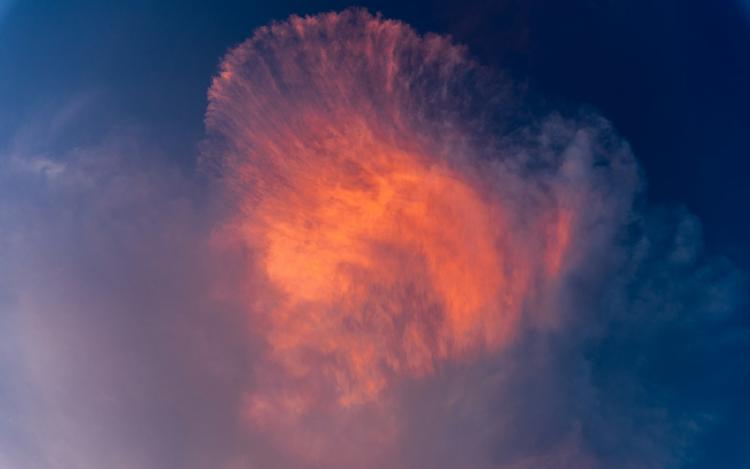
TL;DR 🚀
Make sure to check our deep dive on why this matters.
- A solar plasma cloud is nearing Earth today.
- The event follows a spike in solar activity observed on October 3.
- Experts from leading research institutes are monitoring the situation.
- Potential impacts include disruptions to technology and beautiful auroras.
- Public awareness and understanding of solar phenomena are crucial for preparedness.
A fascinating solar plasma cloud is on a trajectory toward Earth, expected to arrive today, October 7. This phenomenon is a result of a significant surge in solar activity that was recorded on October 3. Scientists from the Laboratory of Solar Astronomy and the Institute of Space Research have provided insights into this cosmic event, emphasizing the importance of understanding solar activity and its implications for life on Earth.
What’s Happening? ☀️
On October 3, a notable solar flare was detected, leading to the release of a massive cloud of plasma. This solar event is part of the sun’s natural cycle of activity, which can influence space weather and even impact our planet. The plasma cloud is composed of charged particles that can interact with Earth’s magnetic field.
As the cloud approaches, scientists are keeping a close eye on its potential effects. Solar flares and coronal mass ejections (CMEs) can sometimes disrupt satellite communications, GPS systems, and even power grids on Earth. For instance, the 1989 geomagnetic storm caused by a CME resulted in a nine-hour blackout in Quebec, Canada, affecting millions. While the impact of this particular plasma cloud is still being assessed, the scientific community is well-prepared to monitor any changes.
The Broader Context
Solar activity is not just a scientific curiosity; it has real-world implications. For example, the NOAA Space Weather Prediction Center provides forecasts and alerts for solar activity, helping industries such as aviation and telecommunications prepare for potential disruptions. The economic impact of solar storms can be significant; a severe solar storm could cost the U.S. economy up to $2 trillion, according to some estimates.
The Science Behind Solar Activity 🔭
Solar activity is a complex phenomenon that occurs in cycles, typically lasting about 11 years. During periods of heightened activity, like the current one, the sun emits more solar flares and CMEs. These events can lead to beautiful auroras but also pose risks to technology.
The Institute of Solar-Terrestrial Physics has been studying these patterns to better understand their implications. For more in-depth information on solar phenomena, check out our post on solar flares and their effects.
The Cycle of Solar Activity
The solar cycle consists of two phases: solar minimum and solar maximum. During solar maximum, the sun is more active, resulting in increased sunspots, solar flares, and CMEs. Conversely, during solar minimum, the sun is quieter, with fewer solar events. As of 2025, we are approaching the peak of Solar Cycle 25, which is expected to reach its maximum in 2025-2026, leading to more frequent and intense solar phenomena.
Quick Takeaways 📌
- Solar plasma clouds can affect technology on Earth.
- The sun’s activity follows an 11-year cycle.
- Monitoring systems are in place to track solar events.
- Increased solar activity can lead to both disruptions and stunning natural displays.
- Understanding solar phenomena is essential for technological preparedness.
FAQ ❔
What is a solar plasma cloud?
A solar plasma cloud is a mass of charged particles released from the sun during solar flares or coronal mass ejections. These clouds can travel through space and interact with Earth’s magnetic field, potentially causing various effects on our planet.
How does solar activity affect Earth?
Increased solar activity can lead to disruptions in satellite communications, GPS systems, and power grids. It can also create stunning auroras in polar regions, which are visible as colorful lights dancing across the night sky. For example, during strong solar storms, auroras can be seen much farther from the poles than usual, captivating observers in regions like the northern United States and Europe.
Are there any safety concerns with this plasma cloud?
While solar plasma clouds can cause disruptions, they typically do not pose direct threats to human health. However, monitoring is essential to mitigate any potential technological impacts. For instance, astronauts aboard the International Space Station may need to take shelter during intense solar events to avoid increased radiation exposure.
How can I prepare for solar storms?
Staying informed about solar activity through reliable sources like NOAA or the European Space Agency can help you prepare. Businesses that rely on GPS or satellite communications should have contingency plans in place. Additionally, individuals can enjoy the beauty of auroras by keeping an eye on space weather forecasts.
In conclusion, the approach of this solar plasma cloud serves as a reminder of the sun’s dynamic nature and its influence on our planet. As we continue to explore the cosmos, understanding these solar events will be crucial for safeguarding our technology and enhancing our appreciation for the universe. Stay tuned for updates as scientists track the cloud’s journey!